
Plumbing service
Water Heater Buying Guide
Tank, tankless, gas, electric, sizing, and cost
Water heater service for homes, businesses, rentals, and property managers in Austin, Marble Falls, and nearby Central Texas communities.
Need water heater service?
Water heater service for homes, businesses, rentals, and property managers. We explain the repair options before work starts.
Common calls
- Tank and tankless comparison
- Sizing guidance
- Energy-efficiency basics
- Installed cost ranges
Service overview
Water heater buying guide
This guide compares tank, tankless, gas, electric, hybrid, and high-efficiency water-heater options for Central Texas homes.
Tank and tankless comparison
Sizing guidance
Energy-efficiency basics
Installed cost ranges
Brand and warranty notes
Code and venting considerations
Central Texas water and climate factors
Repair-versus-replace planning
Services
Understanding Your Water Heater Options
Traditional Tank Water Heaters
Storage tank heaters are the most common and usually the lowest-cost option up front. Gas models recover faster and usually cost less to run. Electric models are simpler to install because they do not need venting. Average lifespan is about 10-12 years.
Tankless (On-Demand) Water Heaters
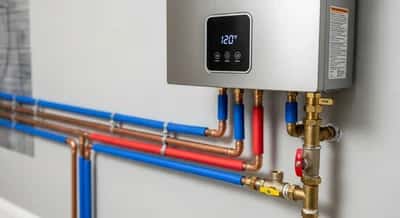
Tankless heaters heat water as it moves through the unit, so there is no storage tank. They save wall space, can run more efficiently than tank heaters, and usually last longer. Upfront cost is higher, and the gas, venting, or electrical setup matters more on these jobs.
Heat Pump (Hybrid) Water Heaters
Hybrid heaters pull heat from the surrounding air instead of making all the heat with electric elements. They can cost less to run, but they need enough air space around them and a location that stays relatively warm.
Solar Water Heaters
Solar systems use roof-mounted collectors to help heat water. They need a backup gas or electric heater, cost more to install, and make the most sense when the property, budget, and long-term plan all line up.
High-Efficiency Tank Heaters
These are upgraded tank heaters with better insulation and more efficient burners or elements. They cost more than standard tanks, but not as much as tankless or hybrid options.
Condensing Water Heaters
Condensing gas heaters capture extra heat from exhaust before it leaves the system. They can run very efficiently, but they need the right venting and condensate drain setup.
Point-of-Use Water Heaters
These small heaters sit near a single sink, shower, or other fixture. They are useful when one area is far from the main heater or when a small addition needs its own hot-water source.
Smart Water Heaters
Some newer heaters include WiFi features for alerts, temperature changes, and usage tracking. Those tools can be useful, but the plumbing setup and install quality matter more than the app.
Common warning signs
Key Factors to Consider Before Buying
Fuel Type Availability
Your home's existing utilities determine options. Gas heaters need gas line and proper venting. Electric heaters require adequate electrical service (sometimes 240V upgrade needed). Changing fuel types adds significant installation cost.
Installation Location & Space
Tank heaters need floor space (2x3 feet minimum). Tankless mount on walls saving space but require specific venting. Heat pumps need 700+ cubic feet air space. Consider access for maintenance and future replacement.
Venting Requirements
Gas heaters require proper venting (atmospheric, power vent, direct vent, or condensing). Venting type affects installation cost and location options. Improper venting is dangerous; use licensed plumbers for gas installations.
Water Quality & Hardness
Central Texas has very hard water causing scale buildup. Tankless heaters are more sensitive to hard water requiring annual descaling. Water softeners extend heater life. Consider water quality when choosing tank vs tankless.
Upfront vs Operating Costs
Cheaper upfront options may cost more long-term. Calculate total cost of ownership including purchase, installation, energy costs (over 10-20 years), and maintenance. Higher efficiency pays back over time through lower utility bills.
Available Rebates & Incentives
Energy-efficient models qualify for federal tax credits (up to 30%), utility rebates ($100-$500), and manufacturer rebates. These incentives can offset 10-30% of purchase cost making efficient options more affordable.
Family Size & Usage Patterns
Large families, teenagers, simultaneous use (morning rush), and luxury fixtures (rainfall showers, soaking tubs) require higher capacity. Empty nesters may benefit from downsizing. Consider current needs and 5-year plans.
Energy Efficiency Goals
If reducing carbon footprint and utility bills are priorities, invest in high-efficiency options. Energy Star certified models use 10-50% less energy. Consider payback period—typically 3-7 years for efficient upgrades.
Warranty & Longevity
Warranty length indicates manufacturer confidence. Residential warranties range 3-12 years for tanks, 10-15 years for tankless. Longer warranties cost more upfront but can reduce surprise repair costs. Extended warranties available.
More to know
How to Size Your Water Heater Correctly
Proper sizing is critical for comfort and efficiency. An undersized heater leaves you with cold showers; an oversized one wastes energy and money.
**Tank Water Heater Sizing (First Hour Rating Method):** Calculate your peak hour demand by identifying your busiest hot water hour (typically morning). Add up gallons used: shower (10-20 gallons), shaving (2 gallons), washing hands/face (2 gallons), dishwasher (14 gallons), washing machine (32 gallons). Match your peak demand to the heater's First Hour Rating (FHR), not just tank capacity.
General guidelines: 1-2 people need 30-40 gallons (FHR 40-50), 2-3 people need 40-50 gallons (FHR 50-70), 3-4 people need 50-60 gallons (FHR 70-90), 5+ people need 60-80 gallons (FHR 90-120+). Families with teenagers, multiple bathrooms, or simultaneous usage need higher capacity.
**Tankless Water Heater Sizing (Flow Rate Method):** Calculate required flow rate (GPM - gallons per minute) by adding simultaneous uses: shower (2.5 GPM), bathroom sink (0.5 GPM), kitchen sink (1.5 GPM), dishwasher (1.5 GPM), washing machine (2.0 GPM). For example, simultaneous shower + kitchen sink = 4 GPM minimum.
Then factor in temperature rise: subtract incoming groundwater temperature from desired output temperature. Central Texas groundwater averages 65-70°F. For 120°F output, you need 50-55°F temperature rise. Higher rises require more powerful units or lower flow rates.
General guidelines: Small homes (1-2 bath) need 5-7 GPM, Medium homes (2-3 bath) need 7-9 GPM, Large homes (3-4+ bath) need 9-11+ GPM or multiple units. Consider whole-house systems for main needs plus point-of-use units for remote fixtures.
**Assessment:** We look at occupancy, peak usage, simultaneous fixtures, existing plumbing, and future needs. Proper sizing can save money up front and over time.
**Cost vs Value Analysis:** While it's tempting to oversize "just in case," oversized tank heaters waste energy maintaining extra hot water you don't use. Oversized tankless heaters cost more without benefit. Right-sizing balances capacity, efficiency, and cost for the best value.
Care and upkeep
Maximizing Your Water Heater Investment
Annual Maintenance
Schedule yearly service including tank flushing, anode rod inspection, burner cleaning, safety testing, and efficiency check.
Regular Tank Flushing (DIY or Pro)
Flush the tank annually to remove sediment. In Central Texas with hard water, consider every 6 months.
Anode Rod Replacement
Check anode rod every 3 years; replace when depleted (core wire exposed over 6 inches). Anode rods ($20-$50 parts) protect tank from corrosion. Replacing extends tank life 5+ years. One of the most important maintenance tasks people neglect.
Water Softener Installation
Consider whole-home water softener for Central Texas hard water. Softeners reduce scale buildup in heaters, pipes, and fixtures. Initial cost ($800-$2,500) pays back through extended appliance life, lower maintenance, and better efficiency.
Temperature Optimization
Set temperature to 120°F for efficiency and safety. Higher temps increase energy use and scalding risk. Lower temps risk Legionella bacteria growth. 120°F balances safety, comfort, and efficiency while reducing mineral buildup.
Expansion Tank Installation
Install expansion tank if not present (required by code in many areas). Prevents pressure damage to heater and plumbing. Especially important with tankless systems. Installation costs $200-$400 but prevents costly damage.
Monitor for Warning Signs
Watch for rust-colored water, strange noises, leaks, insufficient hot water, or pilot light problems. Early detection prevents minor issues from becoming major failures. Address problems promptly to avoid water damage and emergency replacements.
Keep Area Clear & Clean
Maintain 2 feet clearance around heater for ventilation, fire safety, and service access. Never store flammables nearby. Keep area clean and dry. Good access speeds repairs and maintenance, reducing service costs.
FAQ
Frequently Asked Questions
Service request
Request water heater service
Send the service address, a short description of the problem, and the best number to reach you.
Keep exploring
Related Plumbing Services
Compare related plumbing services if you are still narrowing down the problem.
Helpful reading


